


Renovation or new construction? Always a suitable cast floor
Whether you have just moved house or are looking to remodel your current home, in either case you may choose to purchase a new floor. A cast floor is then a stylish and, above all, durable choice. They are strong and can last up to 30 years. However, unlike a parquet floor, for example, there are a number of things to consider if you intend to install a cast floor. We would be happy to advise you.
Suitability in floor renovation
As a rule, a cast floor is well suited for a floor renovation, since it is liquid at the time of application and is only a few millimeters thick. Polyurethane screeds can usually be applied over most existing floors. However, it is important here that the existing floor is sufficiently stable and can provide good adhesion to the new floor. This is not the case with linoleum, siding, cork or a wood floor. In such situations, the existing floor will have to be treated or removed before the new floor can be laid. Materials that are ideally suited as subfloors are anhydrite, sand-cement screeds or concrete.


New construction
A cast floor is also an excellent choice for a new home. But you should be aware that the construction of the floor, and therefore also the stucco, may expand a little over time (often by a few millimeters). So the house is not yet immediately stable, and this also affects the cast floor. If the screed has already been laid in such a situation, cracks are an annoying consequence. If you have a newly built home and want a self-levelling cast floor, choose the EPI Superbase cast floor with EPI Membrane. This offers static crack bridging of 2.5 millimeters. As a result, cracks and fissures in the floor can be virtually eliminated. The EPI Superbase self-levelling screed with EPI Membrane is also highly sound-absorbent, so it is also suitable for noise reduction in apartments, for example. Do you expect your new construction home to set more than 2.5 millimeters? Then wait a while before having the screed applied until the house has stabilized sufficiently. We are happy to advise you, make an appointment in the showroom or contact us.
Maintain a generous schedule
It is wise to plan well into having your screed installed. This starts with the laying of any other subfloor. For example, the subfloor must be thoroughly dry by the time the screed is applied over it, or else blisters may appear in the screed. The application of the screed itself must be planned well, as it takes up to five days. This is because the floor is composed of several layers that need to dry for a while before the next layer is applied. Afterwards, the floor needs to cure for another two days. If you choose a floor with underfloor heating, take into account the heating protocol. This means that before the cast floor is laid, the underfloor heating is started up slowly the first time to prevent cracking in the screed.

Stylish, durable and energy efficient
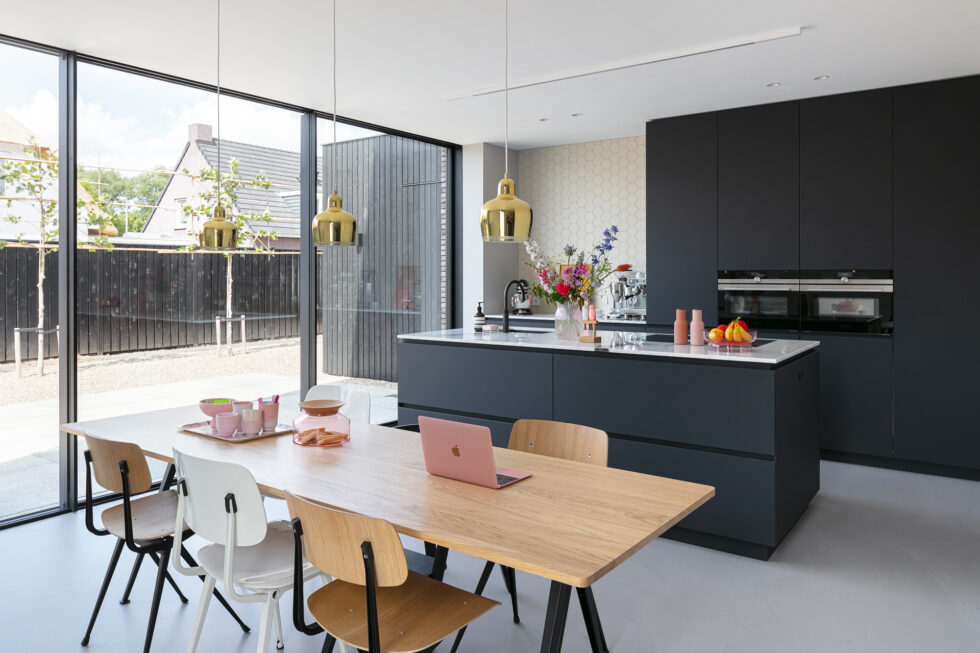
Besides the sustainable aspect and the fact that a cast floor fits very nicely into the interior, a cast floor also offers other advantages. It is quick to clean, requires little maintenance, lasts up to 30 years and is completely seamless. Did you know that a cast floor also goes very well with underfloor heating? Because the floor transfers heat perfectly and distributes it evenly. No more cold feet in winter and in summer the floor provides a cooling effect. As the above shows, it is almost always possible to have a cast floor installed, as long as the existing floor and the home are carefully examined before installation. If this is done carefully you will enjoy your new floor for years to come!